
Aerial drone treatments: effectiveness, regulations and advantages over traditional methods
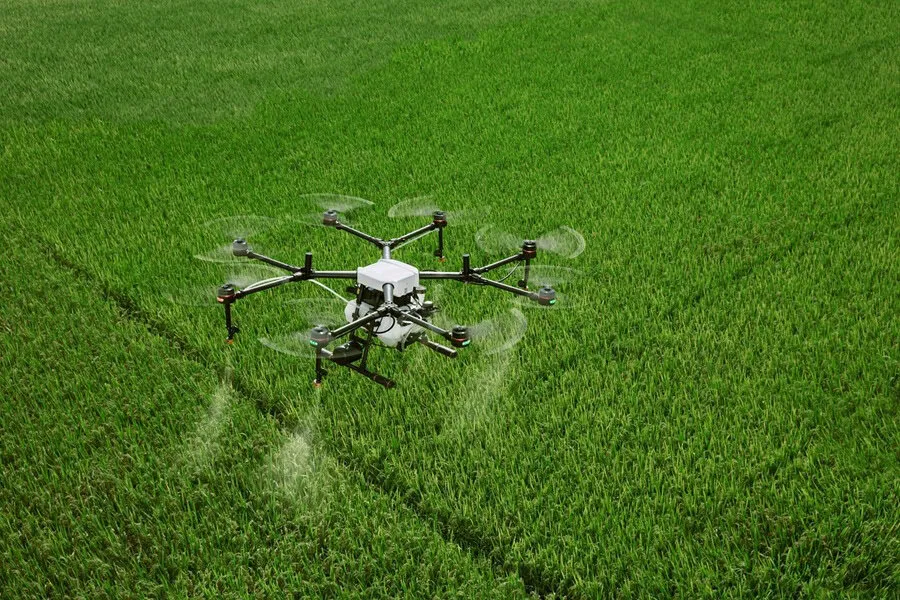
Aerial drone treatments in agriculture
Introduction
In recent years, agriculture has been undergoing a profound transformation, driven by technological innovation and the need to produce more with fewer resources. In this scenario, drones for aerial treatments and aerial distribution are emerging as one of the most interesting and promising tools for the agricultural sector, despite the limitations they are subject to, particularly regarding pesticide spraying. Precision, reduced waste, lower environmental impact and greater safety for operators are just some of the advantages driving more and more farms to look to the skies. From the targeted distribution of pesticides and fertilisers to managing areas that are difficult to reach with traditional equipment, drones offer a new approach to crop protection and nutrition. Furthermore, by combining treatment drones with monitoring drones (see the article on the iDrone service), we achieve the maximum potential of an aerial technology that provides eyes and hands to reduce the costs and time of crop management operations, making it possible to achieve higher yield and quality. But how do drones for aerial treatments actually work? In which contexts are they most effective, and what are the regulatory and technical limits to be aware of? In this article we explore the role of drones in aerial distribution in agriculture, analysing the opportunities, practical applications and future prospects of a technology set to change the way we farm.
Advantages of using drones for treatments in agriculture
Using drones for aerial treatments in agriculture offers numerous advantages, especially from the perspective of precision agriculture and sustainability:
- Targeted distribution and high precision: drones make it possible to apply crop protection products, fertilisers or biostimulants in a localised way, only where needed, reducing waste and overdosing;
- Reduced environmental impact: thanks to reduced distribution volumes, the ability to use prescription maps and greater accuracy, drift of chemical products, water consumption and contamination of soil and neighbouring areas are all reduced;
- Access to difficult areas: drones are particularly effective in rugged terrain, hilly or terraced land, tree crops and vineyards, where using traditional machinery is complex or impossible;
- Greater safety for operators: the operator does not come into direct contact with chemical products, reducing health risks compared with manual treatments or sprayers;
- Speed and operational flexibility: drones can intervene quickly, even immediately after critical events (water stress, pest attacks), optimising treatment times;
- Integration with digital data: they can be integrated with vigour maps, satellite data or field sensors, making treatments part of an advanced decision-making system.
Limitations and critical issues in using drones for treatments in agriculture
Despite the numerous benefits, using drones for aerial distribution still presents some technical, regulatory and economic limitations:
- Regulatory constraints: legislation on aerial treatments is strict and varies from country to country. In many cases, specific authorisations, pilot licences and restrictions on usable products are required. In Italy, aerial pesticide treatments are prohibited, but trials are currently permitted under strict rules;
- Limited payload capacity: compared with traditional equipment, drones have smaller tanks, requiring more flights for large areas and increasing operating times. It is also important to comply with the maximum and minimum doses per hectare specified on crop protection product labels;
- Flight endurance: batteries have a limited lifespan, especially during treatments, requiring careful mission planning and frequent breaks for recharging or replacement;
- Initial costs: the initial investment can be significant, including the drone, distribution systems, staff training and maintenance;
- Sensitivity to weather conditions: wind, rain or high humidity can compromise treatment precision or make it impossible to fly safely;
- Need for technical skills: effective drone use requires specific skills in both piloting and the agronomic management of treatments.
Agrobit and Scaligera Droni: a new commercial partnership for precision agriculture
Innovation in agriculture increasingly relies on the integration of advanced technologies, specialist expertise and strategic vision. It is precisely from this philosophy that the new commercial collaboration between Agrobit and Scaligera Droni was born, a partnership designed to offer farmers concrete, efficient and sustainable tools for crop management. Thanks to this agreement, Agrobit expands its range of precision agriculture services, integrating aerial distribution solutions using professional drones developed by Scaligera Droni, a leading player in the UAV systems sector applied to agriculture.
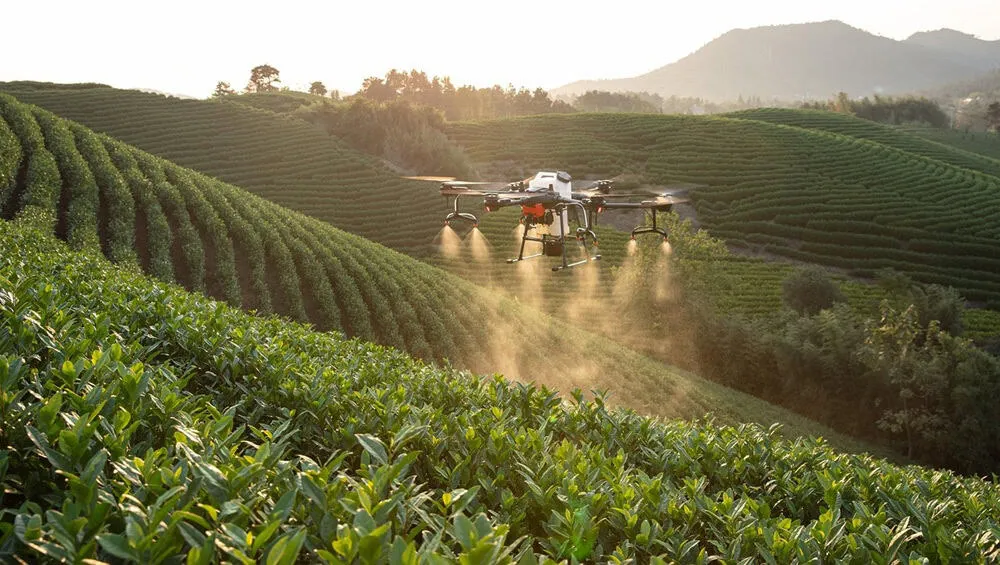
Fig.1: A drone carrying out an aerial treatment in agriculture.
New aerial distribution services offered by Agrobit
Thanks to the commercial partnership with Scaligera Droni, Agrobit is integrating a range of aerial distribution services into its offering, based on the use of professional, high-capacity drones. These solutions make it possible to carry out agronomic interventions with high precision, fast execution and reduced environmental impact, proving particularly effective in contexts where access with traditional equipment is limited or inefficient. Aerial distribution of liquids allows for the uniform application of crop protection products, biostimulants and nutritional solutions, optimising leaf coverage and minimising drift and product waste. The system’s high precision makes it possible to intervene in a targeted way on the areas that really need it, improving treatment effectiveness and the overall sustainability of the intervention. Alongside liquid treatments, drone technology also allows for the aerial distribution of solid materials such as granular fertilisers, seeds and pollen. This type of application is particularly advantageous for localised operations, precision sowing or interventions on complex surfaces, where traditional distribution would be uneven or economically disadvantageous. A further area of application concerns the aerial distribution of beneficial insects and mites, essential for implementing integrated and biological pest management strategies. Using a drone allows for controlled, uniform release of beneficial organisms, improving the effectiveness of biocontrol and promoting a more sustainable approach to pest management. Biocontrol services are particularly effective in containing crop protection issues such as red spider mite and corn borer, allowing timely, targeted interventions, reducing chemical product use and preserving the balance of the agroecosystem. Finally, a key element of the offering is variable rate distribution, which represents one of the highest levels of evolution in precision agriculture. Thanks to integration with prescription maps, agronomic data and field analysis, it is possible to dynamically adjust the quantities distributed according to the crop’s actual needs. This approach makes it possible to maximise input efficiency, reduce operating costs and improve crop yield and quality.
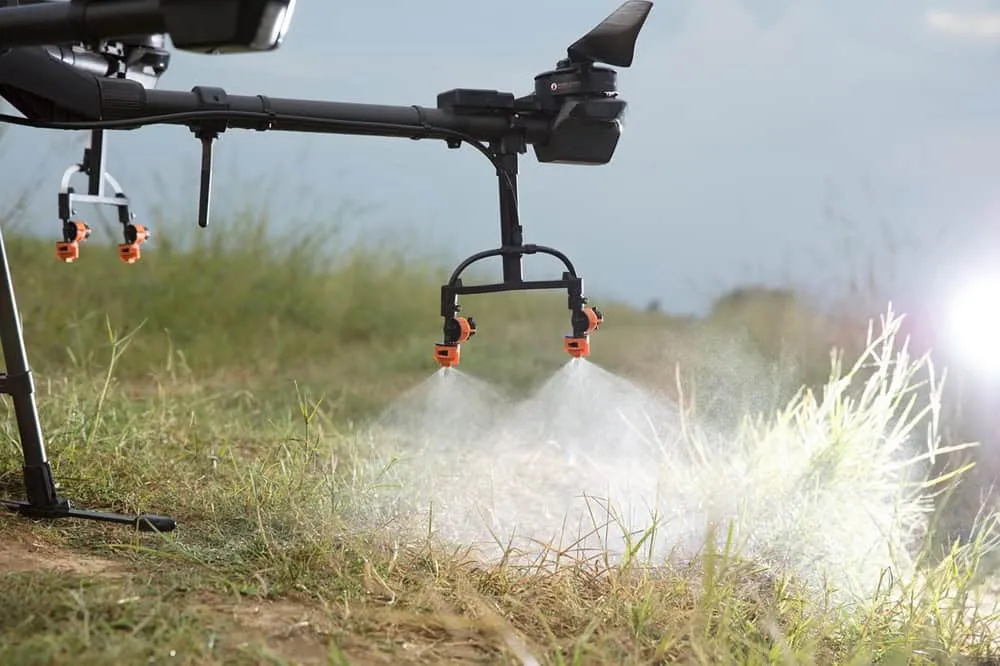
Fig.2: Nozzles fitted on a drone for aerial treatments.
A partnership geared towards the agriculture of the future
The collaboration between Agrobit and Scaligera Droni was created with the goal of providing advanced, reliable technological solutions that can be immediately applied to the needs of modern farms. The combination of agronomic expertise, hands-on field knowledge and the latest drone technology makes it possible to guide farmers towards an increasingly efficient, sustainable and data-driven production model.