
Project: iOlive, streamlined application of foliar fertilisers with the iAgro app
Streamlined foliar fertilisation in olive groves
Introduction
In the heart of Cilento, a region home to centuries-old olive trees that stand as living witnesses to local history and culture, an ambitious project was carried out marking an interesting development in olive farming.
The focus of the iOlive project, funded by EIT Food, was optimising the spray volumes of foliar fertilisers and biostimulants, providing farmers with a digital tool that is intuitive and quick to use for improving spray volumes. The accurate use of these substances, combined with the use of advanced Precision Agriculture tools, promises to reduce environmental impact, improve product quality and increase the overall efficiency of olive farming.
Project description
The project was carried out at the Cilento Farm House, located in the picturesque village of Celso, in the municipality of Pollica, spanning an area of 24 hectares. This land is home to mature olive trees, estimated to be over 50 years old, planted in a free layout.
Since 2022, the farm has begun a process of structurally reshaping the olive tree canopies, moving from the traditional globe shape to the more modern polyconic vase shape. This transformation, although applied to only part of the olive trees present, reflects the farm’s determination to pursue effective, up-to-date farming practices. However, some plots retained the globe shape due to specific business decisions.
Two distinct areas of the olive grove were involved in the project: one with olive trees trained in a globe shape and the other with plants managed in the polyconic vase shape. The trial involved a total of 40 plants, with 20 plants (10 test, 10 control) for each of the two zones (Fig. 1).
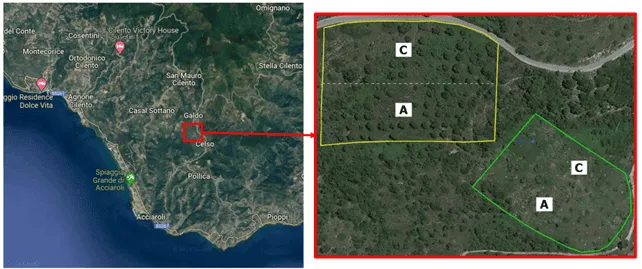
Fig.1: Location of the iOlive project’s test olive groves.
Field surveys
The project began with a detailed survey of the olive groves using a drone flight equipped with a visible (RGB) camera, thereby creating a “digital twin” (3D point cloud) that included the plants and surrounding terrain. This approach provided a complete picture of the olive grove’s structure and plant layout (Fig. 2).
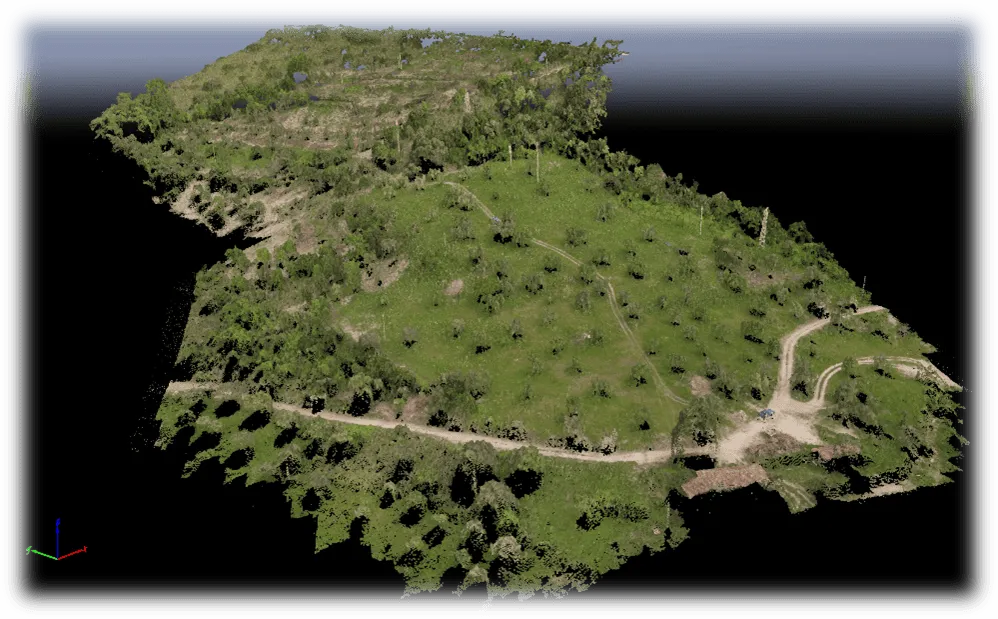
Fig.2: Digital twin of the test olive groves obtained from a drone flight.
Subsequently, two surveys were carried out at different phenological stages using the iAgro app: one at the end of May and one at the end of July. During these surveys, all the olive trees were scanned to obtain a high-precision digital twin of each one (Fig. 3), which was then used to estimate biometric parameters (thickness, height, canopy volume, LAI and TRV). Finally, based on these parameters, the app provided precise guidance on the optimal spray volume dose.
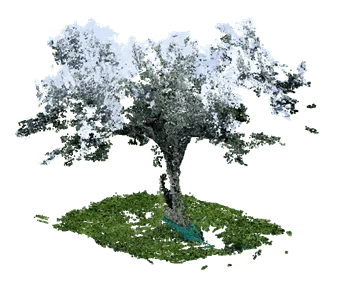
Fig.3: Digital twin of an olive tree scanned with the iAgro app.
In the control zone, a standard dosage of 1,000 litres per hectare was used to apply the biostimulants, while in the test zone the dosage recommended by the app was followed, based on the data collected through the scans. The prescription maps generated by the app enabled targeted, specific product distribution based on the characteristics of each plant (Fig. 4).
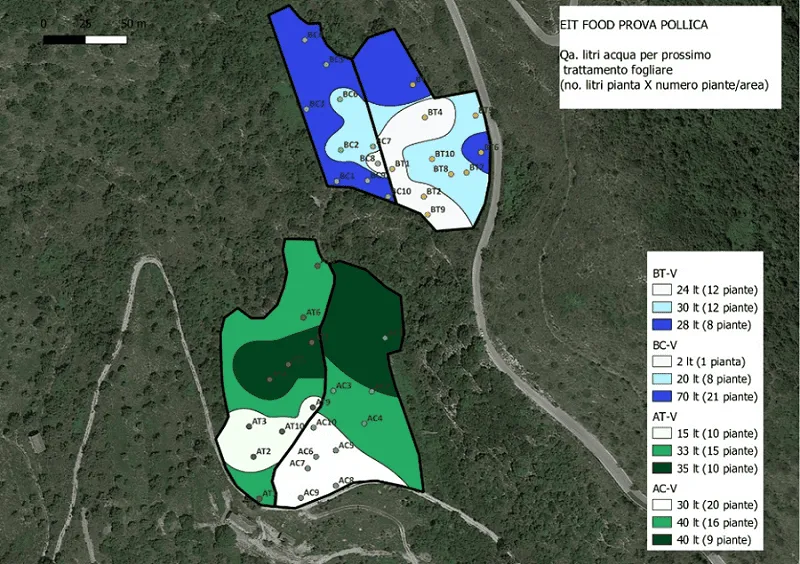
Fig.4: Prescription maps generated by the iAgro app (May survey) for the two test olive groves, showing the litres distributed in each test zone (AT, BT) and control zone (AC, BC). In the control zones, a fixed volume of 1,000 litres per hectare was applied.
Effectiveness of variable rate treatments (VRT)
The comparison between the standard dosage and the one recommended by the iAgro app revealed the effectiveness of the technology in optimising resources, with significant results. The iAgro application made it possible to reduce water use for spraying biostimulants by up to 80%, delivering a considerable saving in water resources (Table 1).
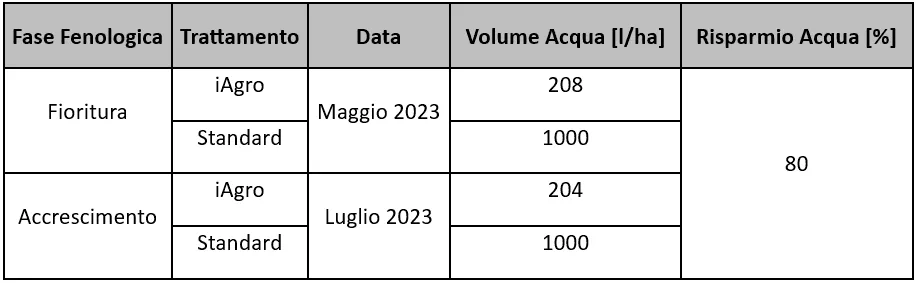
Table 1: iOlive project results: comparison between fixed-rate and variable-rate spraying.
Conclusions
The iOlive project showed how the targeted use of innovative technologies can revolutionise olive grove management, highlighting the value of these resources in optimising the production process. Indeed, the iAgro app played a key role in quickly distinguishing vigour variations between the olive trees in the grove, enabling better resource distribution. Indeed, the maps generated by the app made it possible to precisely manage product spraying, helping to maximise the farm’s overall efficiency and optimise the use of available resources.
The significant reduction in water use, of up to 80%, represents a considerable achievement in terms of environmental sustainability and economic profitability. In a context where efficient management of water resources is essential, as is the case for olive farming in the Mediterranean basin, the adoption of precision systems such as iAgro can be of great importance for farmers.
The results obtained from this study have a direct impact on farming practices, providing farmers with an indispensable tool for more precise, sustainable management of olive groves. This innovative project paves the way for a promising future for olive farming, in which environmental sustainability and product quality go hand in hand with the wellbeing of farming communities.